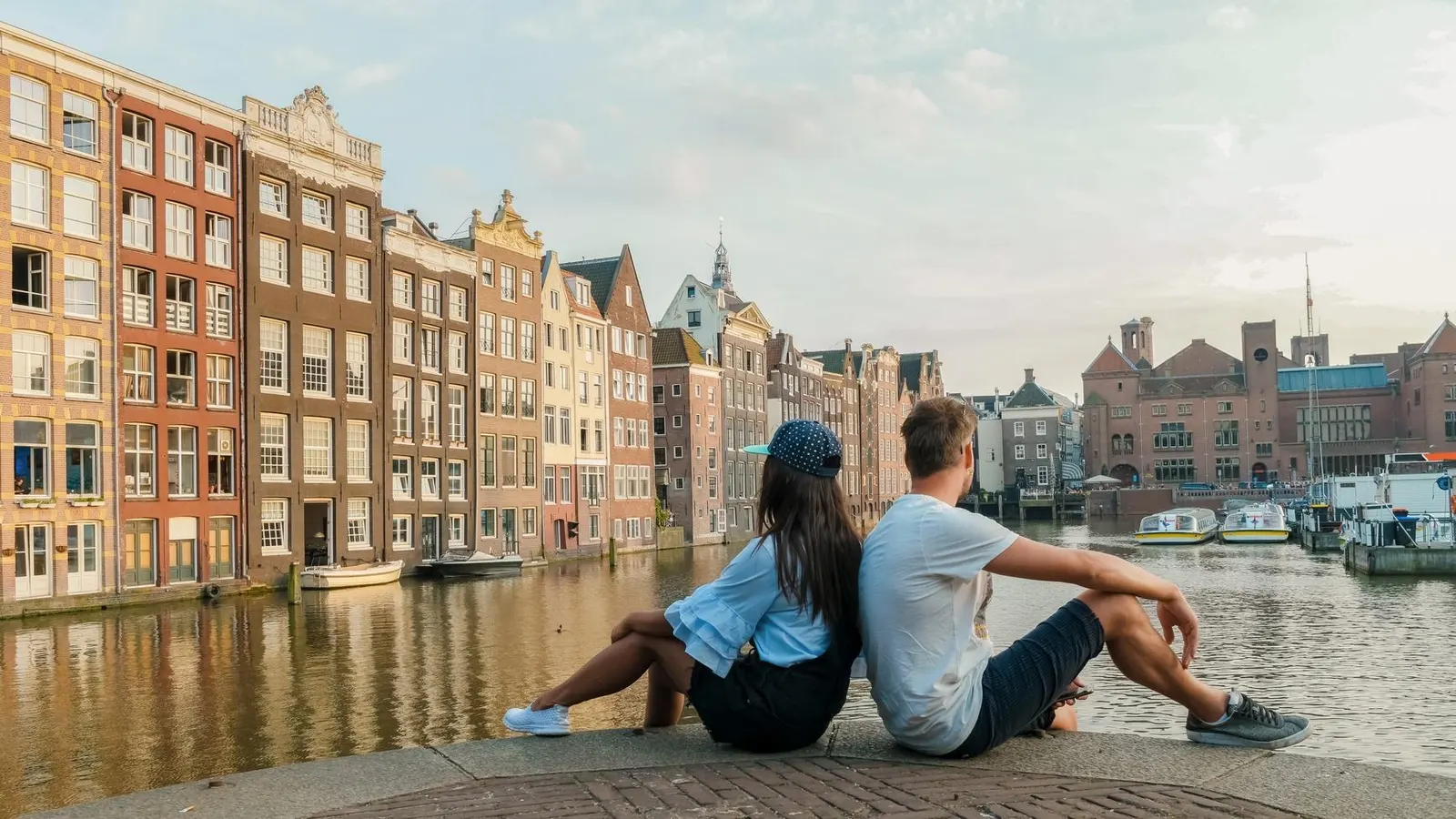
A couple enjoys a peaceful evening along the Damrak in Amsterdam. The Netherlands ranks as the No. 1 safest country in the world for 2026.
getty
What are the safest countries in the world? You can find the answers in the new safest countries report from Berkshire Hathaway Travel Protection, which ranks the world’s places to visit in 2026.
Since 2016, Berkshire Hathaway Travel Protection (BHTP) has surveyed thousands of Americans on where they have traveled in the past five years and how safe they felt during those trips. Only travelers who have visited a country can rate it, making this one of the most experience-based safety studies in the industry.
To round out the findings, BHTP integrates data from sources like Global Peace Index, Numbeo and GeoSure Global. The rankings also incorporate BHTP’s own proprietary algorithms that analyze crime, terrorism, digital threats, health care access and the overall travel experience, including how safe travelers feel in a given destination.
The resulting State of Travel Insurance (SOTI) Safest Destinations report gives a balanced, data-driven view of how travelers perceive safety around the world and how those perceptions shift from year to year. You can compare the new results against last year’s report on the safest countries in the world.
What Is The Safest Country In The World?
For 2026, the Netherlands takes the No. 1 spot, rising from 14th place last year to become the safest country in the world, according to BHTP’s rankings. That’s a dramatic climb and one backed by strong scores across nearly every metric.
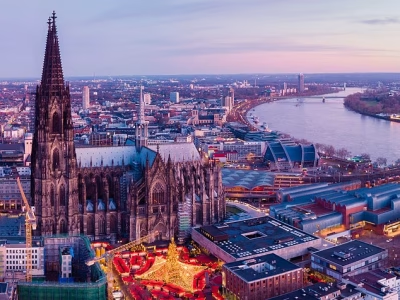
Classic scenery that showcases the peaceful beauty of the Netherlands, ranked the safest country to visit in 2026.
getty
“The Netherlands demonstrated a strong performance across all indexes evaluated this year, with each awarding the country high safety scores,” Carol Mueller, vice president at BHTP, told me in an interview. “Healthcare, stability and safety for female travelers, LGBTQIA+ travelers and travelers of color were all recognized as standout strengths.”
One of the reasons the Netherlands ranks so highly? “It’s a peace-loving place,” write the authors of the report, which also highlights the strong health system. Cities like the Hague and Eindhoven rank especially high on Numbeo’s city-level safety index.
Mueller says that she was surprised by this huge jump. “Over the years, we’ve seen that many destinations tend to hover in a similar spot on the Safest Countries list,” she says. “We were surprised to see the Netherlands jumped from the fourteenth placement to first in just one year.”
Of course, even the safest places come with caveats. One of the main tips for travelers from BHTP: Watch out for bicycles, as Amsterdam’s bustling bike lanes and the rising popularity of high-speed e-bikes require vigilance.
Australia: A Safety Powerhouse
Coming in at No. 2 for the second year in a row is Australia. The country continues to be a reliable favorite for travelers seeking peace of mind.
The iconic Twelve Apostles along the Great Ocean Road in Australia, one of the most breathtaking (and safest) destinations to visit in 2026.
getty
Australia ranks No. 1 for both terrorism safety and health measures, No. 4 for transportation safety and No 6. for safety when it comes to violent crime. BHTP points out that the country has a stable political system and strict biosecurity and gun control laws.
“Australia remains a very safe destination for travelers,” says Mueller. “Though like any global destination, it still requires planning, awareness and sound judgment.”
One note of caution: Australia’s famously strict customs regulations are not to be taken lightly. As the report points out, the country enforces tight controls on imported goods, particularly anything agricultural.
Europe: Leading Travel Safety
As in past years, European countries dominate the list, making up half of the top 15. And while many of these are familiar faces, there were notable changes in this year’s rankings.
A panoramic view of Vienna from the rooftop of St. Stephen’s Cathedral, a must-see destination in Austria, one of the safest countries to visit in 2026.
getty
Austria enters the survey for the first time and lands directly in the No. 3 spot. “Austria was a recent addition to our survey, so it was interesting to see how it cracked the top three placements in its inaugural year,” says Mueller. “As SOTI evaluates a breadth of safety considerations from health to inclusivity and much more, Austria received high marks across the board.”
Iceland, a longtime safety leader, dropped from the No. 1 position last year to No. 4, though it remains the world’s most peaceful country, according to the Global Peace Index. “Iceland experienced a slight decline in ranking this year, which can be attributed to the natural fluctuations in perception and scoring,” says Mueller. The country’s capital, Reykjavik, ranks No. 1 in BHTP’s safest cities report.
Switzerland (No. 8), Ireland (No. 10) both continue strong streaks. This year, Belgium jumps up from No. 20 last year to No. 11—an impressive leap credited to improved city-level safety and inclusivity. France also rose in the results, coming in at No. 13 this year—up from No. 17 last year. Other European cities in the top 15 include Portugal (No. 12), the United Kingdom (No. 14) and Denmark (No. 15).
Safety Leaders Beyond Europe
While Europe dominates the top 15, several standout countries from other regions also made strong showings, proving that safety is a global goal.
Canada comes in at No. 5, reinforcing its position as the safest country in North America. (It ranked No. 3 last year.) The country is No. 2 in three categories: safety from violent crime, transportation safety and safety for women, LGBTQIA+ travelers and people of color. It also ranks high for health safety (No. 5) and safety from terrorism (No. 7). But as BHTP notes, even small missteps such as leaving car doors unlocked can lead to fines in cities like Toronto and Vancouver, so vigilance is still key. And if you’re heading into the Canadian wilderness, you need to be prepared.
On Roy’s Peak overlooking Lake Wanaka in New Zealand, ranked among the safest countries to visit in 2026 thanks to its low crime rate and breathtaking natural landscapes.
getty
New Zealand comes in at No. 6 for the second year in a row, thanks to its peaceful reputation, minimal violent crime and high scores for its major cities. Travelers rate the destination especially well for health, safety, and transportation, though BHTP recommends hiring a guide for those venturing into the country’s more rugged environments like glacier zones.
One of the most notable jumps this year is the United Arab Emirates, which soared from No. 18 last year to No. 7 in 2026. “The UAE’s years of reputation-building as a safe destination has paid off,” notes BHTP. The country enforces strict codes of conduct, so BHTP advises that travelers need to be careful about violating dress and behavior codes. And whatever you do, don’t bring e-cigarettes or products containing CBD (even prescription medications), which are illegal.
Japan ranks No. 9 again this year, continuing to buck the trend that only sparsely populated countries can be safe. The country is known for its clean cities, ultra-efficient public transportation and low violent crime. Travelers are cautioned, however, to be careful about their prescription drugs, as Japan restricts certain medications like Adderall.
Where Did The U.S. Rank?
This year, the United States ranks No. 26, falling well outside the top 15. That’s consistent with past years, says Mueller.
“In the eleven years that SOTI research has been conducted, the United States’ placement within the rankings has been fairly consistent,” she says.
Interestingly, this year marks the first time the U.S. appears in the top 10 list of safest countries among travelers with household incomes of more than $350,000. It’s an eclectic list that also includes the Philippines, Austria and Norway.
Still, the country faces ongoing challenges. Despite scoring well on some city-level metrics (such as Honolulu ranking in the top 5 on BHTP’s annual Safest Cities list), the U.S. continues to lag behind other countries in areas like violent crime, health access and terrorism risks.
Safety Trends To Watch In 2026
One of the clearest shifts in recent years: how travelers define safety is evolving. It’s no longer just about crime rates or terrorism. According to the BHTP report, inclusive safety—meaning how safe women, LGBTQIA+ travelers and people of color feel—is becoming a key metric.
That focus is evident in the top-ranked countries. The Netherlands, which takes the No. 1 spot this year, earned top marks. Canada and Australia also ranked near the top in this category, reinforcing the idea that a sense of belonging and respect is just as important as avoiding risk.
Inclusion is playing a growing role in how people define safety. Destinations that rank highly for the wellbeing of women, LGBTQIA+ travelers and people of color have a strong boost in their overall scores.
Healthcare access is another driving force. Countries with robust systems like Australia, New Zealand, Belgium and Ireland also score well on overall safety. These rankings reflect travelers’ growing awareness of how critical quality medical care can be when navigating emergencies abroad.
As the report reminds readers, no destination is without risk, but with the right preparation, information and mindset, today’s travelers have more tools than ever to choose safe places to visit.
Read on for the list of the world’s 15 safest countries to travel, as well as some of the broken-out lists.
A scenic Amstel River view in Amsterdam, highlighting the Netherland’s charm and safety.
getty
Ranked: The 15 Safest Countries In The World To Travel
- The Netherlands
- Australia
- Austria
- Iceland
- Canada
- New Zealand
- United Arab Emirates
- Switzerland
- Japan
- Ireland
- Belgium
- Portugal
- France
- United Kingdom
- Denmark
Tokyo at sunset. Japan leads the world in safety when it comes to violent crime, making it a top destination for travelers in 2026.
getty
Ranked: The Safest Countries From Violent Crime
- Japan
- Canada
- Belgium
- United Arab Emirates
- New Zealand
- Australia
- France
- The Netherlands
- Portugal
- Ireland
Port Douglas in Queensland, Australia, known for its beautiful beaches and laid-back vibe. Australia tops the list of the safest countries for terrorism threats in 2026.
getty
Ranked: The Safest Countries From Terrorism
- Australia
- The Netherlands
- New Zealand
- Japan
- Iceland
- Switzerland
- Canada
- Italy
- France
- China
Japan ranks as the safest country for transportation in 2026. Pictured here: Kawaguchiko railway station with Mount Fuji in the distance.
getty
Ranked: The Safest Countries For Transportation Safety
- Japan
- Canada
- Austria
- Australia
- France
- The Netherlands
- United Arab Emirates
- New Zealand
- Belgium
- Switzerland
Australia ranks among the safest countries in the world for healthcare in 2026. In cities like Perth, a strong focus on wellness, clean environments and active living supports a healthy lifestyle.
getty
Ranked: The Safest Countries For Health Measures
- Australia
- The Netherlands
- New Zealand
- Belgium
- Canada
- Japan
- Ireland
- France
- United Kingdom
- Iceland
The Netherlands is the safest country for LGBTQIA+ travelers, women and people of color. Pictured here: a couple in Amsterdam, which continues to shine as a destination that embraces diversity and equality.
getty
Ranked: The Safest Countries For Women, LGBTQIA+ Travelers And People Of Color
- The Netherlands
- Canada
- France
- Australia
- Austria
- United Kingdom
- Ireland
- Iceland
- Japan
- Switzerland
Austria is the safest country in the world for families in 2026. In cities like Vienna, parents and kids can explore with ease.
getty
Ranked: The Safest Countries for Families
- Austria
- Japan
- Philippines
- The Netherlands
- Canada
- Switzerland
- Italy
- Ireland
- Dominican Republic
- New Zealand
The Philippines ranks as the safest country for high-income travelers. Pictured here: an aerial view of Snake island in Palawan.
getty
Ranked: Safest Countries for High-Income Travelers
- Philippines
- Italy
- Austria
- Norway
- Canada
- New Zealand
- United States
- Thailand
- Australia
- Turkey